Data Integration Challenges in Healthcare Interoperability
 Iron Bridge
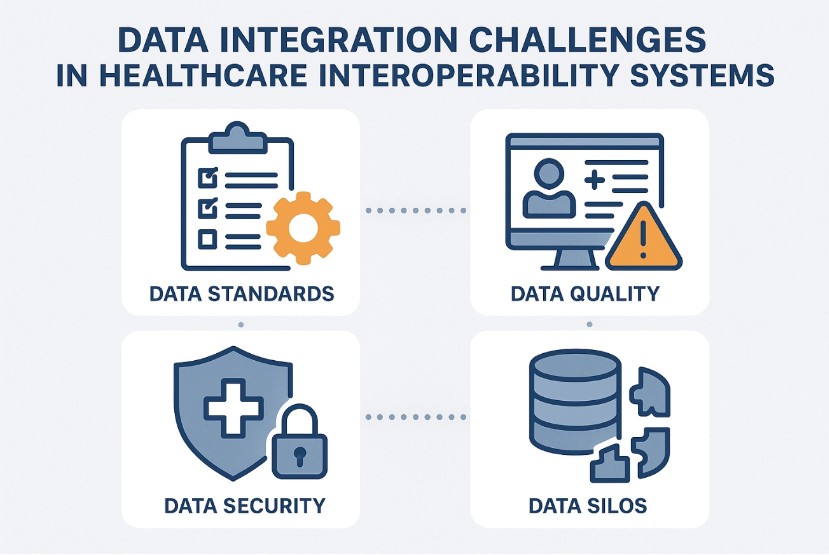
Healthcare organizations face an unprecedented challenge in managing large volumes of patient information across multiple systems. Effective data integration in healthcare has become essential for delivering high-quality patient care. Yet most hospitals and health networks struggle with fragmented systems that create dangerous gaps in clinical workflows.
Industry research indicates that 80% of healthcare providers still rely on disparate systems that cannot communicate effectively, leading to increased medical errors and operational inefficiencies.
The complexity of modern healthcare requires seamless information exchange among electronic health records, laboratory systems, imaging platforms, and billing applications. Healthcare IT leaders must navigate this intricate landscape while ensuring compliance with stringent regulatory requirements and maintaining robust security protocols.
The Current State of Healthcare Data Fragmentation
Healthcare organizations typically manage between 15 and 40 different software systems that operate in isolation. These disconnected platforms create significant barriers to comprehensive patient care and operational efficiency.
Electronic health record systems from different vendors often use proprietary data formats that prevent seamless information sharing. Laboratory information systems store test results in structures incompatible with clinical documentation platforms, while radiology systems maintain imaging data separately from patient encounter records.
This fragmentation extends beyond clinical systems. Administrative platforms for scheduling, billing, and supply chain management frequently operate independently, creating additional data silos that affect revenue cycle management and resource allocation.
Impact on Clinical Operations
Fragmented data systems force healthcare providers to navigate multiple applications during patient encounters. Physicians spend an average of 49% of their workday moving between systems rather than delivering direct patient care.
Critical patient information often remains trapped in isolated databases, preventing care teams from accessing complete medical histories. This constraint increases the risk of medication errors, duplicate testing, and delayed diagnoses.
Emergency departments face particular challenges when treating patients from external facilities. Without integrated access to previous medical records, emergency physicians must make critical decisions based on incomplete information.
Legacy System Challenges and Technical Debt
Most healthcare organizations operate legacy platforms built decades ago using outdated architectures. These systems were designed for standalone functionality rather than integrated, interconnected workflows.
Incompatible Data Standards
Healthcare data standards have evolved significantly, yet many organizations continue to use multiple formats simultaneously:
- HL7 v2: Still prevalent in 95% of hospitals, despite limitations in handling complex clinical concepts
- HL7 v3: Partially adopted by some organizations, creating mixed-standard environments
- FHIR: A modern standard gaining traction but requiring significant infrastructure updates
- DICOM: Essential for imaging but disconnected from broader clinical workflows
- X12: Required for billing transactions yet incompatible with clinical systems
The coexistence of these standards creates translation challenges that consume significant IT resources. Data mapping between formats often results in information loss or misinterpretation.
Security Vulnerabilities in Disconnected Systems
Fragmented architectures multiply potential attack vectors for cybercriminals. Each isolated system requires separate security protocols, authentication mechanisms, and access controls.
Healthcare organizations experienced a surge in cyberattacks in 2023, with many breaches exploiting weaknesses at system integration points. Legacy platforms often lack modern security features, such as encryption at rest, multi-factor authentication, and comprehensive audit logging. The HHS Healthcare Cybersecurity Coordination Center provides essential guidance for securing healthcare IT infrastructure against these evolving threats.
Data Mapping Complexities and Operational Challenges
Converting data between incompatible formats requires sophisticated mapping logic that accounts for semantic differences, structural variations, and contextual nuances.
Clinical Terminology Misalignment
Different systems use varying terminology for identical clinical concepts:
- Medication names differ between formulary systems and prescribing platforms
- Laboratory test codes vary across reference laboratories and internal systems
- Procedure codes conflict between the billing and clinical documentation platforms
These discrepancies require ongoing maintenance of translation tables and mapping rules. Healthcare organizations spend millions annually maintaining these mappings, yet errors still occur with concerning frequency.
Scalability Limitations
Traditional point-to-point integration approaches become unsustainable as healthcare networks expand. Adding new systems or facilities requires the creation of multiple additional connections, exponentially increasing architectural complexity.
Current integration architectures often cannot support the data volumes generated by modern healthcare operations.
Modern Integration Solutions and Architectural Approaches
Progressive healthcare organizations are adopting advanced integration strategies that address core interoperability challenges while positioning their systems for future growth.
API-Driven Connectivity
Modern application programming interfaces enable standardized communication between diverse systems. RESTful APIs using FHIR specifications provide:
- Real-time data exchange capabilities
- Granular access controls to enhance security
- Scalable architectures that support thousands of concurrent connections
- Simplified integration with cloud-based services
Leading health systems report a 60% reduction in integration development time after implementing API-first architectures.
Enterprise Service Bus Architecture
Centralized integration platforms eliminate point-to-point connections through hub-and-spoke models. This approach provides:
- A single connection point for each system
- Centralized data transformation logic
- Comprehensive monitoring and error handling
- Reduced maintenance overhead
Cloud-Based Infrastructure Benefits
Cloud platforms provide elastic scalability and advanced integration capabilities that on-premise systems cannot match. According to recent healthcare IT surveys, 92% of healthcare organizations plan to increase cloud adoption for integration initiatives.
Cloud-native integration platforms offer:
- Automatic scaling based on data volumes
- Built-in disaster recovery capabilities
- Advanced analytics for monitoring data flows
- Reduced infrastructure management burdens
Implementing Secure Data Governance Strategies
Successful integration requires comprehensive governance frameworks that ensure data quality, security, and compliance throughout the exchange process.
Master Data Management
Establishing single sources of truth for critical data elements eliminates inconsistencies across systems. Master data management platforms maintain:
- Unified patient identifiers across all systems
- Standardized provider directories
- Consistent medication formularies
- Synchronized facility and location data
Compliance Framework Integration
Modern integration platforms must support multiple regulatory requirements simultaneously:
- HIPAA: Encryption, access controls, and audit logging requirements
- 21st Century Cures Act: Information blocking prevention provisions
- State regulations: Varying privacy and consent requirements
- International standards: GDPR requirements for multinational operations
Automated compliance monitoring within integration workflows helps prevent violations before they occur. The ONC Health IT Certification Program establishes comprehensive standards and requirements for achieving interoperability compliance.
Best Practices for Healthcare Integration Implementation
Successful integration initiatives require strategic planning and phased execution approaches that minimize disruption while delivering incremental value.
Prioritization Framework
Healthcare organizations should evaluate integration projects based on:
- Patient safety impact
- Operational efficiency gains
- Regulatory compliance requirements
- Revenue cycle improvements
- Provider satisfaction outcomes
Phased Migration Strategies
Attempting complete system overhauls simultaneously creates unacceptable risks. Successful organizations implement:
- Pilot programs with single departments or facilities
- Gradual expansion informed by lessons learned
- Parallel operation of legacy and new systems during transition
- Comprehensive testing at each phase
Change Management Considerations
Technical implementation represents only part of successful integration. Organizations must address:
- Staff training to support new workflows
- Process redesign to leverage integrated capabilities
- Communication strategies to secure stakeholder buy-in
- Continuous improvement mechanisms
Future-Proofing Healthcare Integration Architecture
Healthcare IT leaders must design integration strategies that accommodate emerging technologies and evolving care models.
Artificial Intelligence Integration
AI-powered clinical decision support systems require real-time access to comprehensive patient data. Integration architectures must support:
- High-volume data streaming
- Low-latency processing
- Bidirectional communication with AI platforms
Internet of Medical Things Connectivity
Connected medical devices generate continuous data streams requiring specialized integration capabilities. Recent projections indicate that hospitals will manage more than 50,000 connected devices by 2025.
Precision Medicine Data Requirements
Genomic medicine and personalized treatment protocols require the integration of massive datasets from research databases, clinical trial systems, and molecular diagnostics platforms.
Conclusion
Healthcare data integration represents a critical imperative for organizations seeking to deliver coordinated, efficient patient care. While legacy system constraints and technical complexities create significant obstacles, modern integration architectures offer viable pathways forward.
Healthcare IT leaders must adopt comprehensive strategies that address technical, operational, and organizational dimensions of integration. Success requires a commitment to standardized frameworks, secure governance models, and scalable infrastructure investments.
Organizations ready to transform their integration capabilities should evaluate partners with proven healthcare expertise and comprehensive solution portfolios. IronBridgeCorp specializes in helping healthcare enterprises navigate complex integration challenges through strategic consulting and implementation services tailored to healthcare environments.
Frequently Asked Questions
What is the biggest challenge in healthcare data integration?
The most significant challenge is reconciling incompatible data standards across legacy systems while maintaining security and regulatory compliance.
How long does healthcare system integration typically take?
Enterprise-wide integration projects generally require 18 to 36 months for full implementation. However, phased approaches can deliver initial benefits within three to six months.
What is the average cost of healthcare data integration?
Integration costs vary widely based on organizational size and complexity. Mid-sized hospitals typically invest millions of dollars, while large health systems may spend more on comprehensive integration initiatives.
How can organizations ensure data security during integration?
Organizations should implement end-to-end encryption, role-based access controls, comprehensive audit logging, and regular security assessments. Modern integration platforms include built-in security features that automate many protection mechanisms.
What skills are needed for healthcare integration teams?
Successful integration requires expertise in healthcare standards, enterprise architecture, security protocols, project management, and clinical workflows. Teams benefit from combining IT professionals with clinical informaticists to align technical implementation with care delivery needs.