What Does a Pharmacy Automation Specialist Do?
 Iron Bridge
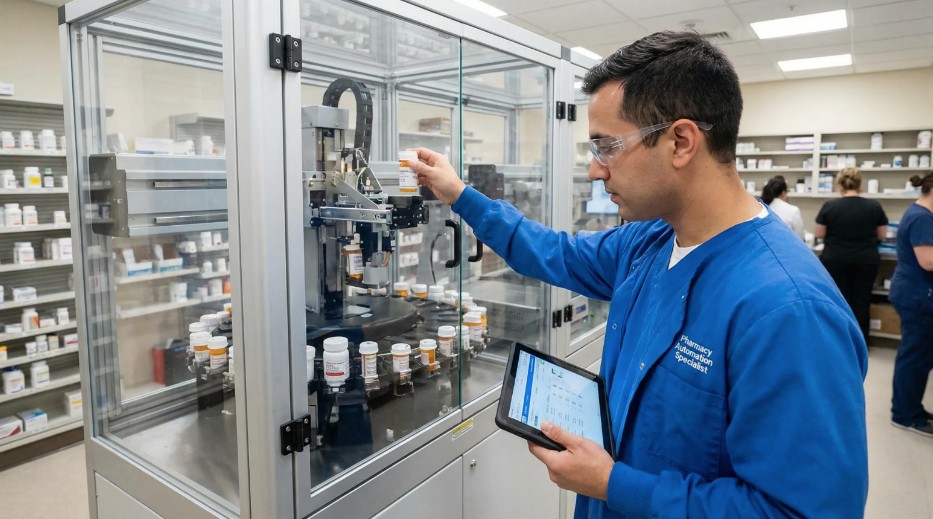
Pharmacy automation has transformed how medications are dispensed, tracked, and managed in healthcare facilities worldwide. Behind these advanced systems are pharmacy automation specialists, highly trained professionals who implement, maintain, and optimize technology solutions that protect patient safety while enhancing pharmacy efficiency.
These experts bridge the gap between traditional pharmaceutical practice and modern technology, ensuring automated systems function seamlessly within complex healthcare environments.
Pharmacy Automation Specialists: Who Are They?
Pharmacy automation specialists are healthcare technology professionals who implement and manage automated dispensing systems, robotic prescription filling equipment, and medication management software.
They combine pharmaceutical knowledge with technical expertise to deploy systems that reduce human error, accelerate prescription processing, and enhance medication tracking across healthcare facilities.
Working at the intersection of pharmacy practice, information technology, and patient care, these specialists understand both the clinical requirements of medication management and the technical specifications necessary for automation systems to function effectively.
Their expertise assures that technology fulfills its core purpose: making medication dispensing safer, faster, and more accurate.
Core Responsibilities of Automation Specialists
System Implementation and Configuration
Pharmacy automation specialists oversee the installation of automated pharmacy systems from initial planning through go-live. They analyze workflow patterns, determine optimal equipment placement, and configure software settings to meet facility-specific requirements. This process involves close collaboration with vendors, IT departments, and pharmacy staff to ensure seamless integration.
During implementation, specialists create customized medication libraries, establish user access levels, and configure safety parameters. They thoroughly test each component before clinical use, verifying barcode accuracy, robotic precision, and proper alert functionality.
Staff Training and Support
A critical responsibility involves training pharmacy personnel on new automation technologies. Specialists develop training materials, conduct hands-on sessions, and create role-specific reference guides.
They instruct pharmacists on appropriate alert overrides, train technicians on correct loading procedures for automated dispensing cabinets, and guide nurses on medication retrieval workflows.
Ongoing support includes troubleshooting technical issues, responding to user inquiries, and providing refresher training as needed. Specialists maintain open communication channels across departments to ensure confidence and competence in system use.
System Maintenance and Optimization
Regular maintenance ensures automation systems operate at peak performance. Specialists schedule preventive maintenance, coordinate repairs, and manage software updates. They monitor system performance metrics to identify issues requiring attention.
Optimization involves analyzing usage data to improve workflows. Specialists may adjust par levels in automated dispensing cabinets based on consumption patterns, reconfigure robotic picking algorithms, or refine alert thresholds to reduce unnecessary interruptions while maintaining safety standards.
Types of Automation Systems
Automated Dispensing Cabinets (ADCs)
ADCs securely store medications on patient care units, allowing nurses timely access without waiting for pharmacy delivery. Specialists configure medication inventories, integrate systems with electronic health records, and establish emergency override protocols.
Robotic Prescription Filling Systems
High-volume pharmacies rely on robotic systems to count pills, label prescriptions, and sort orders. Automation specialists calibrate machines for precision, program them to handle various medication types, and integrate them with pharmacy management systems for streamlined workflows.
IV Compounding Robots
These advanced machines prepare intravenous medications with precision exceeding manual preparation. Specialists ensure exact calibration, validate compounding processes, and maintain sterility in accordance with USP standards.
Medication Packaging Systems
Unit-dose and strip packaging systems require careful setup and oversight. Specialists program these systems to create patient-specific medication packages, reducing errors in complex medication regimens.
Improving Patient Safety Through Automation
Medication errors affect millions of patients annually, but automation significantly reduces these risks. Pharmacy automation specialists implement layered safety mechanisms within their systems. Barcode verification ensures the correct medication reaches the intended patient. Automated alerts identify potential drug interactions, allergies, and dosing errors before medications are dispensed.
Clinical decision support tools integrated into automation systems provide real-time guidance. These tools evaluate prescriptions against patient-specific factors such as age, weight, renal function, and current medications. When discrepancies arise, pharmacists are alerted and can intervene proactively.
The FDA's medication error reporting program shows that facilities using comprehensive automation systems consistently report fewer adverse drug events. Specialists continuously update safety protocols based on emerging data, ensuring alignment with evolving best practices.
Skills and Qualifications Required
Educational Background
Most pharmacy automation specialists hold pharmacy degrees or healthcare informatics certifications. Many complete specialized automation training through programs offered by ASHP, other professional organizations, or equipment manufacturers. Some roles require pharmacy licensure, while others accept IT professionals with relevant healthcare experience.
Technical Competencies
Successful specialists possess strong technical skills, including database management, network troubleshooting, and software configuration. They understand healthcare interoperability standards such as HL7 and FHIR that enable different healthcare systems to communicate. Programming knowledge is valuable for customization and reporting.
Soft Skills
Strong communication skills are essential when training users or explaining technical concepts to non-technical stakeholders. Analytical problem-solving abilities help diagnose complex system issues. Project management expertise ensures implementations remain on schedule and within budget.
Career Outlook and Opportunities
Demand for pharmacy automation specialists continues to grow as healthcare organizations expand their technology investments. Hospitals increase automation footprints, retail pharmacies adopt robotic systems, and long-term care facilities implement electronic medication administration records.
Career progression may include roles such as automation manager, pharmacy informatics director, or consultant supporting multiple facilities. Some specialists transition into vendor positions, contributing to the development of next-generation automation technologies.
Compensation varies by location and experience, but qualified specialists command competitive salaries due to their specialized expertise. The Bureau of Labor Statistics projects continued growth in healthcare technology positions through 2030.
Future Trends in Pharmacy Automation
Artificial intelligence integration represents the next evolution in pharmacy automation. Machine learning algorithms will improve medication demand forecasting, proactively identify potential errors, and optimize inventory management.
Cloud-based platforms enable smaller facilities to access advanced automation without substantial capital investment. Telepharmacy integration supports remote pharmacist verification, expanding automation benefits to rural and underserved areas.
Mobile technology integration provides bedside access to pharmacy systems, streamlining medication administration workflows. Emerging wearable technologies may eventually interface directly with pharmacy systems to support adherence monitoring and automated refill coordination.
Conclusion
Pharmacy automation specialists play a pivotal role in modern healthcare delivery. Their combination of pharmaceutical expertise and technical proficiency enables healthcare organizations to harness automation technology while maintaining rigorous safety standards.
As automation continues to evolve, these professionals will remain central to advancing pharmacy practice, ensuring medications are dispensed safely, efficiently, and accurately.
Ready to enhance your pharmacy's automation capabilities? IronBridgeCorp connects healthcare facilities with experienced pharmacy automation specialists who transform medication management processes. Contact our team to learn how specialized automation expertise can elevate your pharmacy operations and improve patient outcomes.
Frequently Asked Questions
What certifications benefit pharmacy automation specialists?
Valuable certifications include Certified Pharmacy Technician (CPhT), Healthcare Information Security and Privacy Practitioner (HCISPP), and vendor-specific automation certifications offered by companies such as Omnicell or BD. Additional credentials in healthcare informatics or project management may also enhance professional qualifications.
How long does implementing a pharmacy automation system take?
Implementation timelines typically range from 3 to 12 months, depending on system complexity, facility size, and integration requirements. Simple automated dispensing cabinet installations may take only a few weeks, while comprehensive robotic systems require several months of planning, configuration, and testing.
What challenges do automation specialists face most often?
Common challenges include staff resistance to change, integration issues with existing systems, maintaining security while ensuring accessibility, and balancing automation efficiency with the need for pharmacist oversight in clinical decision-making.
Can smaller pharmacies benefit from automation specialists?
Yes. Smaller pharmacies can benefit significantly from automation expertise when selecting appropriate technology, optimizing limited automation resources, or leveraging shared specialist services through consulting arrangements.
`