Why Healthcare Data Integration Matters for Value-Based Care Success
 Iron Bridge
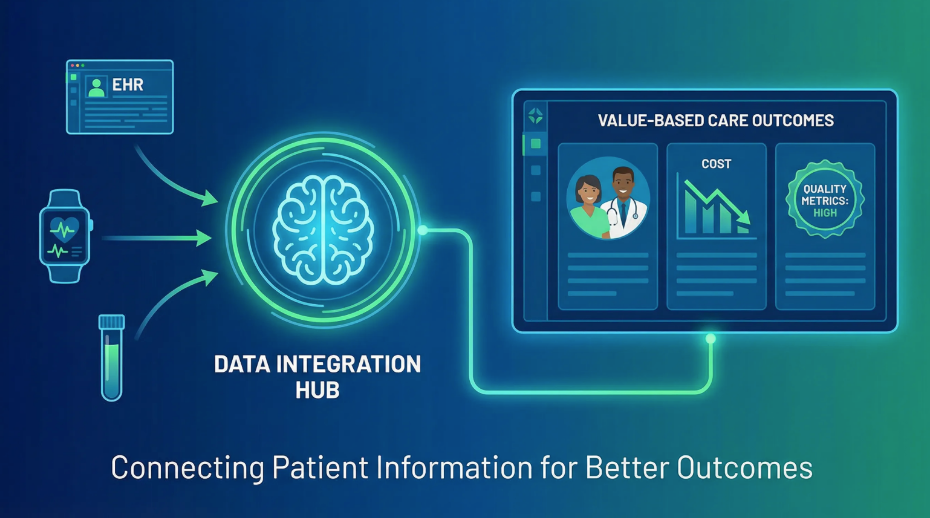
Healthcare organizations face increasing pressure to improve outcomes while controlling costs. As payment models shift, value-based care depends on effective healthcare data integration. ACOs and health systems that combine clinical, financial, and operational data gain the visibility needed to manage populations, improve quality performance, and succeed under performance-based contracts. Data silos remain a major barrier to value-based care. Many organizations still operate with fragmented information spread across multiple systems. Electronic health records, claims platforms, laboratory systems, and specialty applications each hold pieces of the patient story. Without integration, care teams work with incomplete information, and leaders make decisions using partial data.
The Critical Role of Data Integration in Population Health Management
Population health management requires a comprehensive view of patient populations. Organizations must identify higher-risk patients, track chronic conditions, and coordinate care across settings. This becomes difficult when information sits in disconnected systems. Integrated platforms combine information from multiple sources to create unified patient profiles. Care managers can view emergency department visits, specialist consultations, medications, and social determinants of health in one place. This visibility supports proactive interventions before costly complications occur.
Key Components of Effective Population Health Data Integration
Clinical Data Consolidation
Modern integration platforms aggregate diagnoses, procedures, medications, and test results across care settings, including hospitals, primary care, specialists, and telehealth. They standardize data from different formats and coding systems into a unified structure.
Risk Stratification Capabilities
Integrated systems support risk stratification by combining clinical and claims data to identify patients more likely to experience events such as hospitalization or complications. These insights can help care teams prioritize outreach and allocate care management resources.
Care Gap Identification
Data integration helps identify missed screenings, follow-up visits, and medication refills. Systems can flag gaps and route them to appropriate team members for outreach, helping organizations close gaps and deliver timely preventive care.
Transforming Data into Actionable Insights
Data has limited value without analysis and clear presentation. Integration platforms convert fragmented information into insights that support clinical and operational improvement. Dashboards can display performance against quality measures, while analytic models can highlight patients and cohorts that may benefit from intervention.
Analytics Capabilities That Support Value-Based Performance
Organizations typically use multiple analytics types in value-based arrangements: Descriptive analytics show current performance and historical trends.
Predictive analytics estimate the likelihood of events such as readmissions.
Prescriptive analytics recommend actions based on available data and constraints. Integrated data can reduce manual effort in quality monitoring by consolidating the underlying elements needed for calculation and outreach lists. Financial analytics can merge clinical and claims data to clarify cost drivers, identify variation, and support resource allocation for risk-based contracts.
Supporting Performance-Based Reimbursement
Value-based contracts tie reimbursement to quality and cost efficiency. Success requires accurate measurement across entire patient populations. Data integration provides the infrastructure to track, report, and improve performance. For example, CMS reporting on the ACO REACH model shows measurable net savings to CMS and participating organizations. CMS reported $371.5 million in net savings to CMS in performance year (PY) 2022, and $694.6 million in net savings to CMS in PY 2023, alongside reported quality results. Separately, CMS reported that the Medicare Shared Savings Program saved CMS $1.8 billion in 2022, marking another year of MSSP savings.
Complying With Reporting Requirements
Value-based programs have distinct reporting requirements, and those requirements change over time. For the Medicare Shared Savings Program specifically, CMS requires ACOs to report quality performance using defined pathways and specifications (including the APP beginning in PY 2021), rather than relying on a single fixed set of measures indefinitely. Integrated systems can automate parts of the reporting process by extracting required data elements, applying measure logic, and generating submission-ready outputs, reducing manual work and improving consistency. Real-time tracking also helps organizations avoid year-end surprises by monitoring performance throughout the performance period and making mid-course corrections when needed.
Real-World Benefits for ACOs and Value-Based Care Organizations
Organizations with more mature integration capabilities often report operational advantages in value-based programs, including better visibility into care gaps and faster reporting cycles.
Improved Care Coordination
Integrated data helps providers work from a shared source of truth. Primary care teams can access specialist documentation sooner, emergency departments can view recent encounters, and care managers can track patients across settings. This coordination can reduce duplicative testing and help teams spot medication-related risks earlier.
Reduced Administrative Burden
Manual data collection and reporting can consume substantial time. Integration can automate parts of these workflows, allowing staff to focus on care delivery and improvement initiatives.
Improved Patient Engagement
Comprehensive patient data supports more personalized outreach and education. Targeted interventions, based on clinical history, utilization patterns, and barriers to care, tend to be more useful than one-size-fits-all messaging.
Technical Considerations and Implementation Best Practices
Successful healthcare data integration requires careful planning and execution. Organizations must address technical, operational, and cultural considerations to achieve desired outcomes.
Data Governance and Quality Management
Poor data quality undermines integration efforts. Strong governance supports accuracy, completeness, and consistency through standardized definitions, validation rules, and regular audits. Master patient indexing is critical when combining data from multiple sources. Systems must accurately match records while avoiding false matches. Advanced matching algorithms use multiple identifiers to improve match performance.
Security and Privacy Requirements
Healthcare data integration must comply with HIPAA and other privacy regulations. Systems require robust access controls, audit trails, encryption, and role-based permissions. On the threat side, healthcare has faced significant cybersecurity pressure in recent years. For example, U.S. officials cited that the data of more than 167 million Americans was affected in 2023 due to healthcare-related cybersecurity incidents, underscoring the scale of the problem.
In addition, the HIMSS survey report indicated that phishing is frequently cited as a common initial point of compromise.
Measuring ROI and Performance
Executives need clear evidence that integration investments deliver value. Organizations should track financial, operational, and clinical indicators. Financial indicators may include shared savings earned, penalties avoided, administrative cost reductions, and quality bonus payments. Operational indicators often include reduced report generation time, faster care-gap closure, and improved care team productivity. Clinical outcomes remain the ultimate measure of success. Integrated data can support reduced avoidable utilization, fewer complications, and improved chronic disease management, benefiting patients while supporting financial performance under value-based contracts.
Conclusion
Healthcare data integration is foundational to effective value-based care. Organizations that invest in comprehensive integration capabilities are better positioned as payment models continue shifting toward quality and outcomes. The ability to combine, analyze, and act on integrated data differentiates organizations that can manage performance from those that struggle as fee-for-service declines. ACOs and health systems seeking to advance integration capabilities should assess current systems, identify gaps, and develop strategic roadmaps. Iron Bridge Corp specializes in designing and implementing data integration solutions that support value-based care success. Contact our team to learn how integrated data can strengthen your population health management and performance-based contracting outcomes.
Frequently Asked Questions
Q: How long does healthcare data integration typically take to implement?
A: Timelines vary widely based on scope, vendor landscape, data complexity, and governance readiness. Many organizations phase delivery, starting with a small set of high-value sources (for example, EHR and claims) and expanding over time.
Q: What are the biggest challenges in healthcare data integration?
A: Common challenges include inconsistent data formats, variable standards adoption, workflow resistance, resource constraints, legacy system limitations, and vendor interoperability barriers.
Q: How much should organizations budget for data integration initiatives?
A: Costs vary significantly by organization size, architecture, vendor contracts, and scope (interfaces, data platform, analytics, governance, and security). Many organizations develop a multi-year roadmap and budget in phases rather than relying on a single universal benchmark.
Q: Which data sources should organizations integrate first?
A: Many organizations prioritize EHR data, claims data, and ADT (admission/discharge/transfer) feeds because they support attribution, utilization visibility, care coordination, and quality workflows.