The 9 Best Healthcare Data Integration Companies of 2026
 Iron Bridge

The top healthcare data integration companies in 2026 include Iron Bridge Corp, InterSystems, Epic Systems, Oracle Health, Redox, NextGen Healthcare, Rhapsody Health, Health Catalyst, and Infor Cloverleaf. These vendors provide interoperability platforms that connect healthcare systems, databases, and applications across the healthcare industry.
Healthcare data integration companies support standards such as HL7 v2 messaging, HL7 FHIR APIs, X12 claims processing, and DICOM imaging protocols, helping organizations manage large volumes of clinical information stored in healthcare databases while maintaining secure interoperability. Platforms such as the Iron Bridge healthcare data integration help organizations integrate healthcare systems and manage healthcare-specific data exchange across the healthcare industry.
This guide reviews leading healthcare data integration companies and explains how their platforms support interoperability across hospitals, pharmacies, digital health companies, and public health systems.
What Good Healthcare Data Integration Looks Like
Effective healthcare data integration creates a secure, reliable environment where clinical and operational data can move seamlessly across systems.
Healthcare organizations often rely on multiple disparate systems, applications, and databases in cloud environments. Integration strategies connect these systems so information flows consistently across the healthcare organization.
Well-designed healthcare integration environments typically include:
- Seamless data flow across EHRs, laboratory systems, imaging platforms, and pharmacy systems
- Support for interoperability standards such as HL7, FHIR, DICOM, and X12
- Data governance frameworks that improve data quality and reliability
- Integration pipelines that support both real-time and batch data exchange
- Analytics-ready datasets that support reporting and data-driven healthcare operations When these elements are in place, healthcare organizations gain a consistent view of clinical and operational data, improving collaboration across care teams and administrative departments.

Why Secure Healthcare Data Integration Matters
As healthcare increasingly depends on connected digital infrastructure, integration is critical for ensuring clinical information can move safely between systems.
Healthcare data integration platforms must support regulatory requirements such as HIPAA while protecting sensitive patient information. According to the Office of the National Coordinator for Health Information Technology, interoperability frameworks are essential for improving health information exchange across healthcare systems.
Secure integration environments typically include:
- Role-based access controls and audit logging
- Encryption for data in transit and at rest
- Consistent governance across healthcare systems
- Reliable pipelines for public health reporting and analytics When implemented correctly, integration not only addresses integration challenges but also improves healthcare quality by enabling healthcare professionals to access complete patient records across systems.
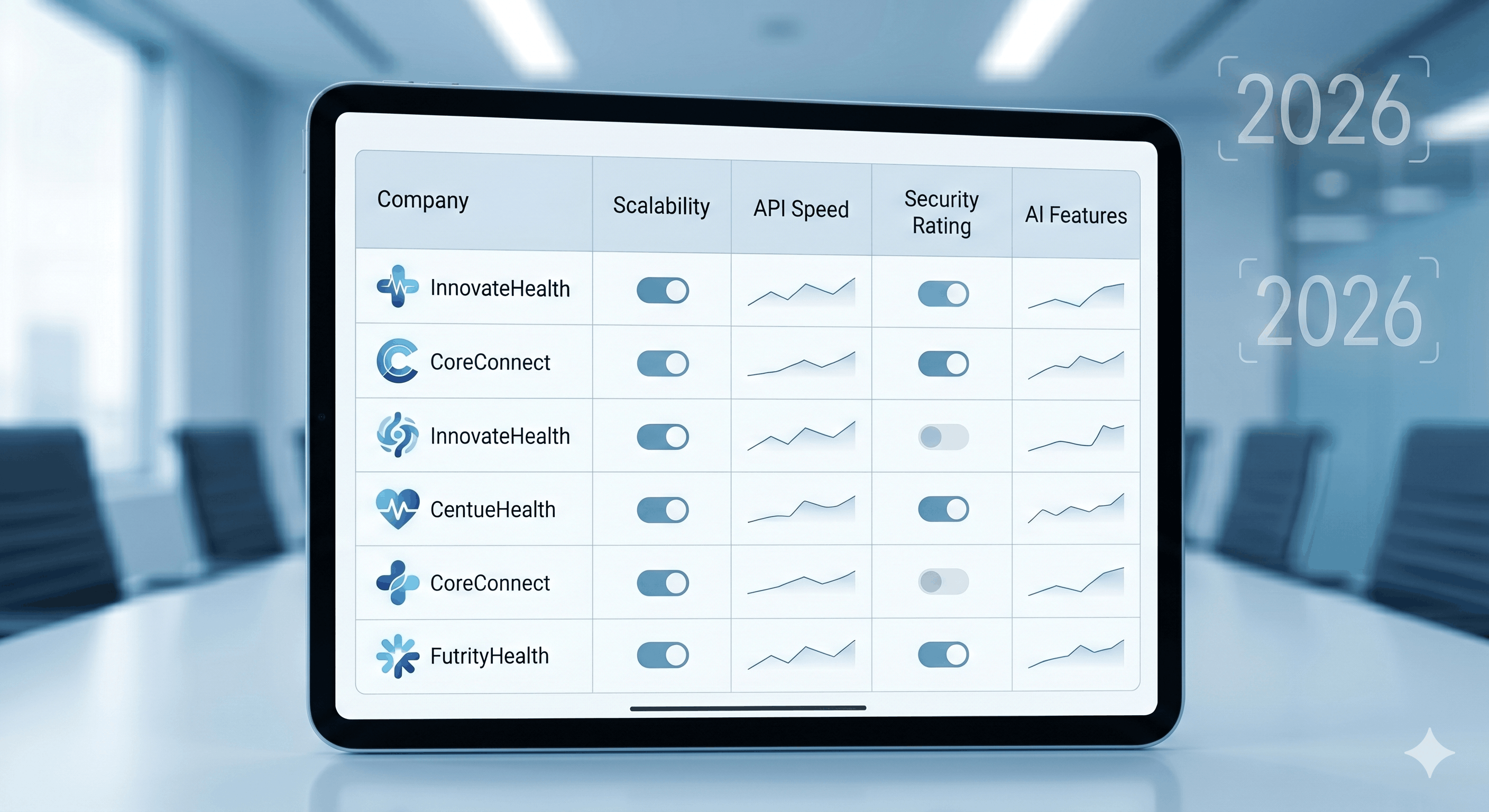
Top Healthcare Data Integration Companies in 2026
- Iron Bridge Corp
- InterSystems
- Epic Systems
- Oracle Health
- Redox
- NextGen Healthcare
- Rhapsody Health
- Health Catalyst
- Infor Cloverleaf Each of these vendors supports healthcare interoperability in different ways, from enterprise integration platforms to API-driven connectivity solutions.
#1. Iron Bridge Corp
Iron Bridge Corp focuses exclusively on healthcare interoperability and data integration services through their Pub Hub Data Integration platform, designed for complex healthcare environments.
Our platform connects healthcare providers, retail pharmacies, public health agencies, and electronic health record vendors through secure, standards-based data exchange through the Pub Hub eCR/Syndromic Surveillance solution.
We built the Iron Bridge healthcare data integration platform to help organizations integrate healthcare systems across distributed care networks.
Key Capabilities:
- Integration across EHRs, retail pharmacies, laboratory systems, and public health registries
- Support for HL7 v2 messaging and HL7 FHIR APIs
- Healthcare-specific integration pipelines designed for regulatory reporting
- Modular architecture that supports expanding interoperability requirements Public Health Connectivity: Healthcare organizations often face integration challenges when reporting immunization data to state registries. Iron Bridge provides solutions for immunization registry integration, enabling pharmacies and health systems to transmit vaccination records using the Pub Hub Vaccine Management platform accurately.
Best For: Pharmacies and health systems reporting to immunization registries, distributed healthcare networks with multiple clinical systems, and organizations seeking specialized healthcare interoperability expertise.
#2. InterSystems
InterSystems is one of the most established healthcare interoperability vendors in the industry. Its HealthShare interoperability platform connects EHRs, laboratories, imaging systems, and pharmacy platforms across enterprise healthcare environments.
- Vendor-neutral healthcare integration platforms
- Support for HL7, FHIR, and other interoperability standards
- Real-time clinical data exchange across hospitals and health systems
- Infrastructure designed for large healthcare networks Best For: Large health systems and government healthcare programs require enterprise-scale interoperability infrastructure.
#3. Epic Systems
Epic Systems operates one of the largest electronic health record ecosystems in the United States. The company supports healthcare interoperability through tools such as Care Everywhere, which allows participating hospitals to exchange patient data across organizations.
- EHR-centered healthcare integration capabilities
- Support for HL7 and FHIR interoperability standards
- Secure API connectivity for digital health applications Best For: Large hospital systems operating within the Epic healthcare ecosystem.
#4. Oracle Health
Oracle Health, formerly Cerner, provides enterprise clinical systems and interoperability solutions for hospitals and health systems.
- Enterprise healthcare IT infrastructure
- Integration across clinical and financial systems
- Cloud-based deployment using Oracle Cloud Infrastructure Best For: Large healthcare organizations operate complex hospital networks.
#5. Redox
Redox provides an API-driven healthcare interoperability platform designed to connect digital health companies with EHR systems.
- API-first healthcare integration architecture
- Connectivity with more than 100 EHR systems
- Support for FHIR and HL7 standards Best For: Digital health companies and healthcare startups are building EHR integrations.
#6. NextGen Healthcare
NextGen Healthcare focuses on ambulatory care environments and physician practices. Its integration engine, NextGen Connect (formerly Mirth Connect), is widely used by healthcare integration engineers.
- HL7 messaging transformation and routing
- Workflow automation for healthcare data exchange
- Integration across EHR, laboratory, and billing systems Best For: Healthcare organizations are managing complex interface environments.
#7. Rhapsody Health
Rhapsody Health provides interoperability platforms designed for high-volume healthcare messaging environments.
- Integration support for HL7, FHIR, X12, and CDA
- Data normalization and patient data management
- Infrastructure for health information exchanges Best For: Hospitals and regional health information exchange networks.
#8. Health Catalyst
Health Catalyst focuses on healthcare analytics and data platforms that support clinical and operational improvement initiatives.
- Enterprise healthcare data warehouse platforms
- Integration pipelines connecting EHR and operational systems
- Analytics tools supporting population health initiatives Best For: Healthcare organizations are building data-driven healthcare programs.
#9. Infor Cloverleaf
Infor Cloverleaf is one of the most widely used healthcare integration engines in hospital environments.
- HL7 messaging management across healthcare systems
- Support for FHIR and X12 interoperability standards
- High-volume message routing across hospital IT infrastructure Best For: Hospital IT teams manage complex healthcare interface environments.

Comparison Table: Top Healthcare Data Integration Companies
| Company | Core Strength | Best For |
|---|---|---|
| Iron Bridge Corp | Public health interoperability | Pharmacies, health systems |
| InterSystems | Enterprise interoperability | National health systems |
| Epic Systems | EHR ecosystem integration | Large hospitals |
| Oracle Health | Enterprise clinical systems | Health systems |
| Redox | API-driven integrations | Digital health companies |
| NextGen Healthcare | Integration engine | Physician practices |
| Rhapsody Health | Messaging interoperability | Hospitals and HIEs |
| Health Catalyst | Healthcare analytics | Health systems |
| Infor Cloverleaf | Interface engine | Hospital IT teams |
Why Healthcare Data Integration Matters Now
Many healthcare organizations still rely on legacy systems that keep clinical and operational data in separate silos.
These fragmented environments create familiar problems:
- Duplicate or incomplete patient records
- Delays in accessing clinical data
- Inconsistent reporting across systems Healthcare integration platforms address these challenges in healthcare by connecting systems and standardizing data formats.
The right integration partner helps organizations:
- Connect disparate healthcare systems
- Improve data quality across systems
- Support analytics and reporting
- Reduce operational inefficiencies and lower healthcare costs
How to Choose a Healthcare Data Integration Vendor
Healthcare organizations evaluating vendors should consider several factors.
Healthcare Domain Expertise
Integration vendors should demonstrate experience working with EHRs, laboratory systems, pharmacy platforms, and public health reporting systems.
Standards-Based Interoperability
Platforms should support industry standards such as HL7 v2, HL7 FHIR, DICOM, and X12. According to HL7 International, interoperability standards enable healthcare systems to exchange data consistently across organizations.
Security and Compliance
Healthcare integration platforms must protect patient data while meeting regulatory requirements such as HIPAA.
Scalability
Integration platforms should support growing data volumes and expanding healthcare networks.
What Makes the Best Healthcare Data Integration Companies?
Healthcare data integration companies play a critical role in enabling interoperability across the healthcare industry. By connecting clinical systems, applications, and databases, integration platforms allow healthcare professionals to access patient information and deliver coordinated care.
The companies highlighted in this guide provide a range of interoperability solutions, from enterprise integration platforms to API-driven connectivity tools. Organizations evaluating healthcare integration vendors should focus on interoperability standards, security, scalability, and healthcare expertise.
Selecting the right platform helps organizations integrate healthcare systems effectively, overcome integration challenges, and build a more data-driven healthcare infrastructure.
Frequently Asked Questions
What is healthcare data integration?
Healthcare data integration connects healthcare systems so clinical and operational data can move between applications using standards such as HL7 and FHIR.
Why is healthcare interoperability important?
Interoperability allows healthcare providers to access patient information across systems, improving care coordination and clinical decision-making.
What standards do healthcare integration platforms support?
Most healthcare integration platforms support HL7 v2 messaging, HL7 FHIR APIs, X12 claims processing, and DICOM imaging standards.