What Is Interoperability in Healthcare
 Iron Bridge
What is interoperability in healthcare, and is it important? Healthcare interoperability allows different systems, applications, and organizations to exchange electronic health information and use it correctly. Without that ability, clinicians work with incomplete records, patients repeat the same information, and vital results may not reach the right system in time.
Healthcare interoperability does more than transfer a file from one location to another. The receiving system must recognize the patient, understand the data's structure and meaning, protect it during exchange, and place it where clinicians can use it.
For healthcare providers, this reliable exchange can improve clinical decisions and reduce the time spent searching for missing information.
That process becomes difficult when hospitals, laboratories, pharmacies, public health agencies, and health plans use systems built by different vendors during different technology eras.
What Is Healthcare Interoperability in Practical Terms

People asking what is healthcare interoperability often expect a highly technical definition. In daily healthcare operations, the idea becomes easier to understand.
A patient may receive care from a primary care office, an independent laboratory, a hospital, a pharmacy, and a specialist. Each organization creates or updates a different part of the patient record.
Interoperability allows authorized systems to exchange information such as
- Patient demographics
- Allergies and intolerances
- Medication histories
- Laboratory orders and results
- Diagnoses and procedures
- Immunization records
- Clinical notes
- Claims and encounter information
- Public health reports
In practical terms, healthcare interoperability means that different systems can exchange patient information in a standardized format and make that information usable by the receiving organization.
The ASTP and ONC interoperability program supports this type of exchange by advancing national standards and frameworks that help healthcare organizations share electronic health information more consistently. Initiatives such as the United States Core Data for Interoperability and the Trusted Exchange Framework and Common Agreement provide a foundation for making those real-world exchanges more reliable across providers, networks, and health IT systems.
Interoperability succeeds only when the receiving organization can incorporate information into its workflow. A laboratory result that arrives as an unreadable attachment has technically moved between systems. However, it provides limited value if the EHR cannot identify the test, result value, units, reference range, and patient.
Reliable access to healthcare information also depends on clinicians' ability to locate and understand the data during the patient encounter. Sending information alone does not create an effective interoperable healthcare environment.
What Does Interoperability Mean in Healthcare Workflows
To answer the question "what does interoperability mean in healthcare?", consider what happens after one system sends a message.
The receiving system must complete several tasks correctly.
- Establish a secure connection
- Recognize the message format
- Match the information to the correct patient
- Interpret clinical codes and values
- Place the information in the proper record
- Make the information available to authorized users
- Record the transaction for monitoring and auditing
A successful connection handles these tasks consistently. A basic interface may handle only the first two.
This distinction explains why interoperability and integration do not mean exactly the same thing. Integration connects systems. Interoperability allows connected systems to exchange information that each system can understand and use.
Iron Bridge explains this difference in its guide to integration versus interoperability in healthcare.
For organizations pursuing improved interoperability, this distinction matters. A connection may transfer data successfully while still failing to support meaningful clinical use.
The Four Levels of Healthcare Interoperability
Healthcare organizations can evaluate interoperability across four related levels.
Each level helps explain how technology, data meaning, workflows, and governance work together to support care interoperability.
Foundational Interoperability
Foundational interoperability allows one system to send data to another. The receiving system accepts the information, but it may not automatically interpret or organize it.
A faxed clinical document and a basic electronic file transfer can support foundational exchange. They move information but may still require manual review and data entry.
Structural Interoperability
Structural interoperability defines the format, syntax, and organization of exchanged information.
For example, a message may specify where to find the patient identifier, test name, result value, units, and observation date. The receiving system knows which data belongs in each field.
Semantic Interoperability
Semantic interoperability preserves clinical meaning.
Two systems may use different local names for the same laboratory test or medical concept. Terminology standards such as LOINC, SNOMED CT, and ICD help systems interpret those concepts consistently.
Without semantic interoperability, one system may receive a code but misunderstand what that code represents.
Organizational Interoperability
Organizational interoperability addresses the policies, permissions, governance structures, legal requirements, consent rules, trust agreements, and workflows that support exchange.
A technically correct interface cannot address a missing consent policy or an unclear data-sharing agreement. Healthcare organizations must address technology, governance, security, and workflow requirements together.
This organizational work can help drive interoperability across departments, partner organizations, and regional exchange networks. It also helps ensure that technical connections follow shared policies and support practical care delivery.
What Happens When Healthcare Systems Cannot Communicate
Disconnected healthcare systems create problems long before an interface fails completely. Staff members often compensate by making phone calls, searching portals, using spreadsheets, entering data twice, and manually reviewing documents.
Those workarounds may hide the depth of the problem while increasing administrative work.
A persistent lack of interoperability can also make delays and incomplete records feel like normal parts of healthcare operations.
Clinicians See Incomplete Patient Histories
A hospital EHR may contain one medication list while a pharmacy system contains a newer version. A specialist may not see laboratory results completed at another facility. An urgent care center may not receive a recent hospital discharge summary.
Clinicians must then make decisions without the full clinical picture.
Incomplete records can hide allergies, prior diagnoses, recent test results, and treatment changes. Staff members may spend valuable time searching several applications or requesting records from another organization.
ASTP and ONC data from 2023 found that 71 percent of nonfederal acute care hospitals reported having necessary outside clinical information available electronically at the point of care. However, only 42 percent reported that clinicians routinely used that information during patient care. That gap shows why simply making data available does not guarantee meaningful use.
At any healthcare facility, clinicians need outside information to appear in a usable location within the primary workflow. Requiring staff members to search separate portals can reduce the practical value of available data.
Patients Repeat Tests and Information
Patients often repeat their medication lists, medical histories, insurance information, and recent procedures because systems cannot retrieve those details.
Clinicians may also order another test when they cannot locate the original result or confirm when the test occurred.
Duplicate testing adds expense and can delay care. It may also expose patients to unnecessary procedures or radiation when the repeated test involves medical imaging.
For this reason, interoperability is essential when patients receive services from several organizations, each of which holds part of the clinical record.
Medication Information Falls Out of Date
Medication reconciliation depends on accurate information from EHRs, pharmacy systems, claims records, discharge summaries, and patient reports.
When those sources remain disconnected, one care team may not know that another provider changed or discontinued a medication.
The problem becomes especially important during care transitions. A patient may leave a hospital with a new medication plan while an outpatient system still displays the previous list.
Public Health Reporting Slows Down
Healthcare organizations send information to public health agencies for disease surveillance, electronic case reporting, laboratory reporting, immunization programs, and other reporting requirements.
Manual reporting creates opportunities for delays, incomplete records, and transcription errors. Automated public health data exchange can route standardized information to the appropriate agency while reducing repetitive work.
The CDC Public Health Data Interoperability program covers major reporting areas, including electronic case reporting, immunization reporting, syndromic surveillance, and electronic laboratory reporting.
Iron Bridge discusses the role of connected information during emergencies in its article on healthcare interoperability during public health crises.
Staff Members Switch Between Too Many Systems
Fragmentation forces clinicians and administrative teams to search across multiple applications during a single encounter.
One system may hold laboratory results. Another may contain outside records. A third may display immunization history. A fourth may manage referrals or claims.
Iron Bridge reviews these operational issues in its overview of data integration challenges in healthcare interoperability.
Stronger vendor interoperability can reduce these disconnected workflows by helping systems from different technology companies exchange data through consistent standards and implementation requirements.
Patient Matching Becomes More Difficult
Systems cannot exchange useful information unless they identify the correct patient.
Small differences in names, addresses, dates of birth, phone numbers, and identifiers can create duplicate or unmatched records. A name change or data entry mistake may prevent an incoming result from reaching the correct chart.
Organizations need patient-matching rules, data-quality controls, exception queues, and manual review procedures for uncertain matches.
Why Legacy Healthcare Systems Still Matter
Many healthcare organizations cannot replace every older system at once.
A hospital may use a modern EHR alongside an older laboratory information system, billing platform, imaging application, or departmental database. Some systems still perform essential functions reliably but do not support newer APIs.
Replacing them can require major investments, staff training, testing, data migration, and workflow changes. It can also interrupt clinical and financial operations.
The practical goal is to connect these systems while the organization modernizes at a manageable pace.
A healthcare data integration platform can receive information in an older format, validate it, translate it, and deliver it in the format required by a newer application. This approach lets organizations keep useful legacy technology without forcing every connected system to use the same technical language.
Connecting legacy platforms to modern standards can support improving interoperability without requiring an organization to replace every application at once.
Standards That Support Modern Healthcare Data Exchange
Healthcare interoperability relies on agreed formats, terminology systems, implementation guides, and transport methods.
HL7 Version 2
Healthcare organizations have used HL7 Version 2 messaging for decades. It commonly supports admissions, discharges, transfers, laboratory results, orders, and other clinical events.
Many legacy systems continue to depend on HL7 Version 2. Modern integration platforms must therefore support established HL7 workflows while accommodating newer exchange methods.
HL7 FHIR
Fast Healthcare Interoperability Resources, commonly called FHIR, uses web technologies and modular data structures called resources.
A resource may represent a patient, observation, medication, condition, encounter, or immunization. Applications can request specific information through an API rather than exchanging an entire clinical document.
The ASTP and ONC FHIR resource explains how federal agencies use FHIR to promote standardized electronic health data exchange, care coordination, public health reporting, and patient access.
ASTP and ONC also reported that about 9 in 10 hospitals enabled patient access to health information via an API in 2024. Seven in ten hospitals reported using standards-based APIs such as FHIR for patient access.
USCDI
The United States Core Data for Interoperability defines a common set of health data classes and elements for nationwide exchange.
It helps establish the information certified systems must support. Examples include medications, allergies, laboratory results, procedures, clinical notes, and patient demographics.
TEFCA
The Trusted Exchange Framework and Common Agreement provides a nationwide policy and technical foundation for health information exchange.
TEFCA seeks to reduce dependence on separate participation agreements and isolated network connections. It supports approved exchange purposes among providers, payers, patients, public health agencies, and other participants.
Clinical Terminology Standards
Message formats alone cannot preserve clinical meaning.
Healthcare systems also use terminology standards such as LOINC for laboratory observations, SNOMED CT for clinical concepts, and RxNorm for medications. Mapping local codes to recognized terminology helps ensure systems interpret the information correctly.
How Integration Platforms Connect Old and New Systems
A modern integration platform acts as an intermediary between applications that use different formats, protocols, and data models.
The platform can
- Receive HL7 messages, files, API requests, and other transactions
- Validate required fields and message structures
- Match patients, facilities, and trading partners
- Translate older messages into newer formats
- Map local codes to standardized terminology
- Route information to the correct destination
- Retry failed transmissions
- Record acknowledgments and errors
- Monitor message volume and interface performance
This architecture reduces the need to build and maintain a separate point-to-point connection for every pair of systems.
Iron Bridge provides healthcare data integration services that support validation, transformation, translation, mapping, and data exchange across different healthcare environments.
These capabilities help healthcare organizations drive interoperability between older clinical applications, modern APIs, public health systems, and external partners.
How Interoperability Supports Vaccine Management
Immunization reporting requires more than sending vaccination events from an EHR or pharmacy system.
Healthcare organizations may also need to query an immunization information system, retrieve a patient history, receive vaccine forecasts, identify rejected submissions, and manage connections across multiple jurisdictions.
The CDC describes immunization information systems as confidential, population-based databases that consolidate vaccination information from participating providers. The CDC Immunization Gateway supports vaccination reporting and queries between provider organizations and jurisdictional immunization systems.
Iron Bridge offers vaccine management software that helps EHR vendors, hospitals, pharmacies, laboratories, and other healthcare organizations connect to immunization registries. The platform supports vaccination submissions, patient history queries, and forecasting information across participating registries.
These connections help organizations keep vaccine records more complete while reducing the work of maintaining separate interfaces for different jurisdictions.
They also give healthcare providers better access to current immunization information during patient care.
How Interoperability Improves Laboratory Reporting
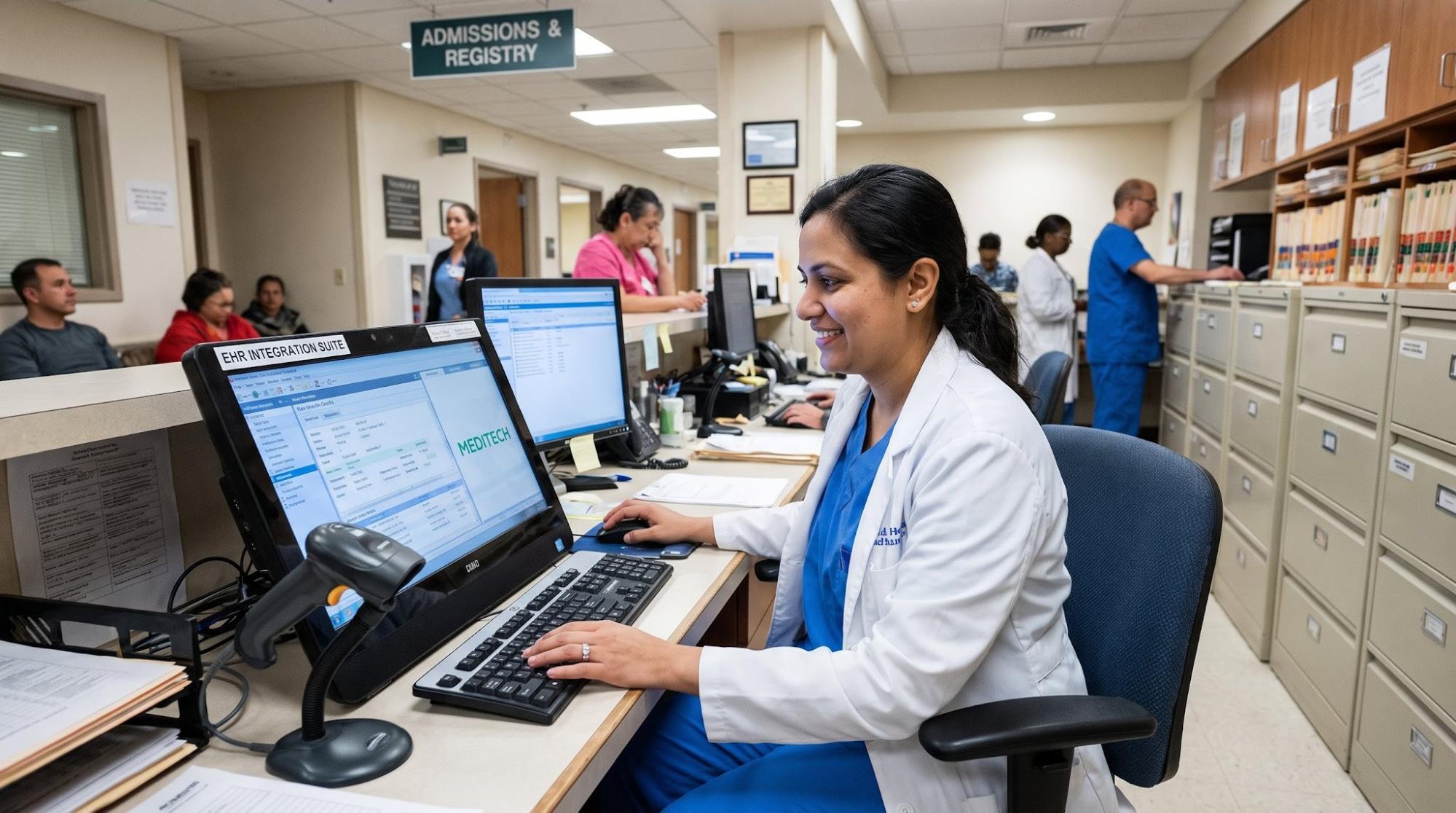
Laboratories generate information that supports patient treatment, disease surveillance, and public health response.
When laboratory systems cannot communicate with EHRs or public health agencies, staff members may need to enter data manually, correct formatting errors, or investigate reports that are rejected.
The CDC Electronic Laboratory Reporting program defines ELR as the electronic transmission of laboratory reports to public health agencies. CDC supports health departments with technical assistance, system improvements, and interoperability work related to laboratory reporting.
Iron Bridge supports electronic laboratory reporting through technology that can validate, transform, and route laboratory information to the appropriate public health destination. This type of connection helps laboratories meet reporting requirements while keeping data structured and usable.
The CDC also continues to support electronic test orders and results between public health laboratories and hospital systems. Its Electronic Test Orders and Results initiative focuses on modernizing bidirectional laboratory data exchange.
Reliable exchange between laboratories, EHRs, and public health agencies remains an important part of care interoperability across the healthcare industry.
Questions to Ask Before Connecting Healthcare Systems
Healthcare leaders should define the workflow before selecting an interface or integration platform.
They should ask
- Which systems create and consume the information?
- Which standards and versions does each system support?
- How quickly must the information arrive?
- Which identifiers support patient matching?
- Which terminology systems does each application use?
- Who handles rejected or incomplete transactions?
- How will the organization monitor interface failures?
- Which privacy, security, consent, and retention rules apply?
- Can the connection support future reporting requirements?
- How will users access the information during their normal workflow?
A technically successful connection can still fail its users when it delivers information to the wrong location or requires several extra steps to find it.
Organizations should measure success through clinical and operational outcomes, not message volume alone.
They should also consider whether the project supports broader vendor interoperability and reliable access to healthcare information across the care network.
Better Healthcare Connections Support Better Decisions
Healthcare interoperability enables different systems to exchange patient information and put it to practical use. Without it, clinicians work around data gaps, patients repeat information, public health reporting slows, and organizations spend more time maintaining isolated connections.
Legacy systems do not need to disappear overnight. Healthcare organizations can use a healthcare data integration platform to validate, translate, map, and route information between established applications and newer standards such as FHIR.
Creating an interoperable healthcare environment requires more than one interface. Organizations need dependable standards, accurate patient matching, usable workflows, shared governance, and technology that can connect systems from different vendors.
IronBridge Corp. helps hospitals, EHR vendors, laboratories, pharmacies, urgent care organizations, and public health agencies connect diverse healthcare systems. Its solutions support vaccine management software, electronic laboratory reporting, immunization exchange, and broader public health data exchange requirements.
Contact Iron Bridge to discuss how your organization can connect legacy systems with modern interoperability standards and improve access to usable healthcare information.