How to Implement Interoperability in Hospitals: 6-Step Guide
 Iron Bridge
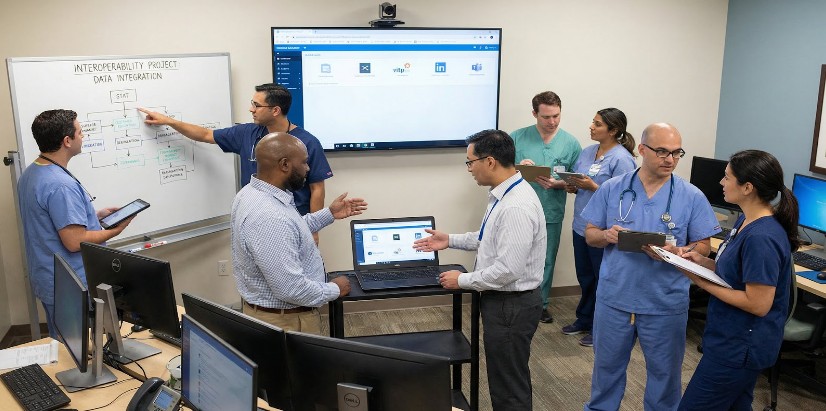
To understand how to implement interoperability in hospitals, healthcare organizations need to connect clinical and administrative systems, standardize data using frameworks like FHIR, and enable secure data exchange across departments and external partners.
Nearly 80% of healthcare executives rank interoperability as a top priority, yet many hospitals still rely on disconnected systems that slow down care and create inefficiencies. This gap highlights why a structured approach to interoperability has become essential.
This guide walks through the process step-by-step, so you can move from siloed data to a more connected and efficient operation in 2026 and beyond.
Key Findings: The State of Interoperability in Healthcare

Understanding where the industry stands today helps hospitals set realistic benchmarks before beginning their own implementation journey. Research consistently shows that improving interoperability healthcare-wide remains one of the most urgent challenges facing health systems.
A 2023 report from the Office of the National Coordinator for Health Information Technology found that only 43% of hospitals routinely engage in all four domains of interoperability exchange — sending, receiving, finding, and integrating patient data from outside sources.
Despite widespread adoption of electronic health records, true health interoperability remains elusive for many organizations because EHR adoption alone does not guarantee that systems can meaningfully communicate.
Hospitals that have successfully implemented interoperability standards such as HL7 FHIR report measurable gains: reduced duplicate testing, faster care transitions, and improved patient safety outcomes.
These findings underscore a critical point — the ability to exchange data is not the same as the ability to use it, and that distinction drives every step of this guide. Organizations that advance interoperability beyond foundational data exchange consistently outperform peers on both operational efficiency and patient experience scores.
Understanding the Four Levels of Hospital Interoperability

Before diving into implementation, it helps to understand what interoperability looks like in practice. The Healthcare Information and Management Systems Society defines four levels, each building on the one before it.
Level 1: Foundational Interoperability
At this level, systems can send and receive data, but they do not interpret it. Information arrives, but staff still need to translate or re-enter it before they can use it.
Level 2: Structural Interoperability
Here, systems use standardized formats like HL7 or CDA. These formats organize data, so it lands in the right fields. Patient names, dates of birth, and diagnoses stay consistent across systems.
Level 3: Semantic Interoperability
This level adds shared meaning. Systems understand the data the same way. Code sets like SNOMED CT, ICD-10, and LOINC ensure consistency across organizations.
Level 4: Organizational Interoperability
For the second level, hospitals align policies, governance, and legal frameworks. This alignment supports secure data sharing across institutions. Without it, even clean data can hit compliance roadblocks.
Most hospitals operate between Level 2 and Level 3 today. The goal is to move steadily toward full semantic and organizational interoperability.
Key Steps to Implement Interoperability in Your Hospital

The process of implementing interoperability in hospitals can feel complex, but it comes with several key benefits. Breaking it into clear steps makes it manageable.
Step 1: Assess Your Current Systems and Data Landscape
Start by mapping every system that handles patient data. Include your EHR, lab systems, radiology platforms, pharmacy tools, and billing software.
Next, look for gaps. Where does data get stuck? Where do teams rely on manual workarounds?
Focus on:
-
Data formats and standards in use
-
Existing integrations and how well they perform
-
Breakdowns in data flow between departments and partners
This step sets the foundation for everything that follows.
Step 2: Define Clear Interoperability Goals and Standards
Once you understand your current state, set clear goals. You might want to reduce duplicate lab orders, speed up discharge communication, or improve reporting to public health agencies, which can be done with the help of Iron Bridge's Pub Hub Data Integration platform.
Align these goals with standards like HL7 FHIR. This framework supports modern API-based data exchange and plays a central role in hospital interoperability implementation today.
Step 3: Select the Right Integration Platform
Technology choices shape your success. Many hospitals try to build custom integrations, but costs and complexity grow quickly.
Cloud-based platforms offer a more practical path. They reduce infrastructure costs and make it easier to connect with partners.
Solutions like Iron Bridge RapidReport Electronic Lab Reporting platform help hospitals exchange data securely without the overhead of traditional systems.
Step 4: Clean and Standardize Your Data
Even the best integration platform cannot fix messy data. Before connecting systems, clean your data.
Map local codes to national standards. Remove duplicate patient records. Set up strong data management practices.
Skipping this step leads to unreliable results, even if systems technically connect.
Step 5: Build Secure Data Exchange Workflows
Security must stay front and center. Protect data at every stage.
Because of this, you must use encryption for data in transit and at rest. Set up role-based access controls. Track activity with audit logs.
Then, stay aligned with HIPAA requirements and evolving regulations. Strong security practices protect both patients and your organization.
Step 6: Test, Validate, and Scale
Start small. Run pilot programs with a few departments or partners.
Test data accuracy, speed, and reliability. Gather feedback from clinicians and staff who use the systems daily.
Once everything works as expected, expand in phases. Keep monitoring performance and refining workflows. Implementing interoperability in hospitals is not a one-time project. It evolves.
Overcoming Common Barriers to Hospital Interoperability
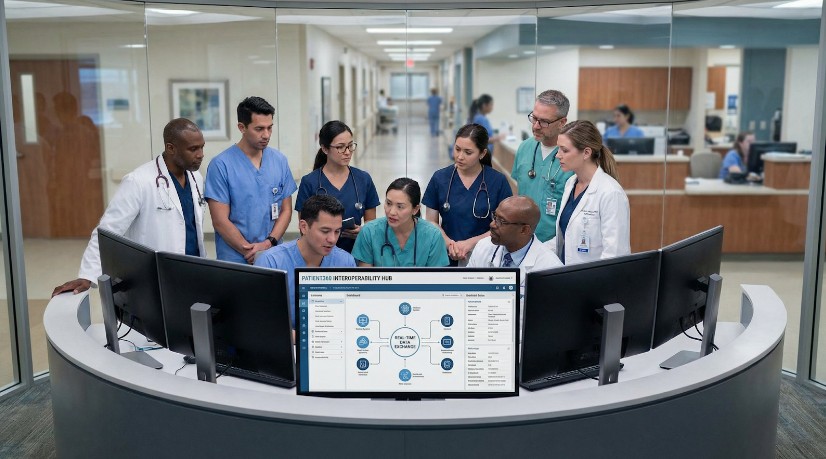
Even with a solid plan, challenges in healthcare interoperability will come up. Here is how to handle the most common ones.
Legacy Systems
Older systems often struggle to connect with modern platforms. Instead of replacing everything, use integration tools that bridge the gap.
Platforms like those from Iron Bridge's Pub Hub help translate between legacy systems and newer standards.
Budget Constraints
Interoperability projects compete with every other capital expense in a hospital. Cloud-based solutions significantly reduce upfront costs compared to on-premises builds.
Iron Bridge Pub Hub offers flexible pricing that works for organizations of all sizes, from small rural hospitals to large health systems.
Resistance to Change
Clinicians and administrative staff may push back if new workflows add friction to their day. The key is involving end users early in the planning process.
Show them how interoperability reduces duplicate data entry, speeds up results delivery, and eventually makes their jobs easier. When teams see real benefits, adoption improves.
Regulatory Complexity
Healthcare regulations vary by state, and compliance requirements around data sharing continue to evolve.
Partnering with a vendor that stays current on regulatory changes, including electronic lab reporting requirements and syndromic surveillance mandates, removes a significant burden from internal teams.
Lack of Organizational Alignment
Interoperability touches every department in a hospital. Without executive sponsorship and cross-departmental collaboration, projects stall.
Assign a dedicated interoperability lead or committee to maintain momentum and accountability across the organization.
How to Implement Interoperability in Hospitals Successfully

Implementing interoperability in hospitals takes careful planning, the right technology partner, and a commitment to data standards and security.
But the payoff is enormous: faster clinical decisions from better healthcare data integration, fewer errors, better patient experiences, and smoother collaboration with labs, pharmacies, and public health agencies.
If you want to move forward, solutions from Iron Bridge offer practical tools to simplify healthcare data integration without unnecessary complexity.
Frequently Asked Questions About Hospital Interoperability Implementation
What are the four levels of hospital interoperability, and which one is most hospitals at?
The four levels are Foundational (systems exchange data without interpretation), Structural (standardized formats like HL7), Semantic (systems understand data the same way using standards like SNOMED CT and ICD-10), and Organizational (governance and policy frameworks). Most hospitals today operate between Level 2 and Level 3.
How can hospitals implement interoperability on a budget?
Cloud-based integration platforms like Iron Bridge eliminate expensive hardware and software licensing costs.
This approach makes interoperability more accessible.
Why is data standardization critical for hospital interoperability?
Dirty data derails interoperability faster than other factors.
Data standardization involves mapping local codes to national standards, resolving duplicate patient records, and establishing master data management protocols.
Without this, technically connected systems still produce unreliable information.
What is FHIR, and why does it matter for healthcare interoperability?
FHIR (Fast Healthcare Interoperability Resources) is a modern data exchange standard using RESTful APIs for real-time data sharing.
The ONC requires certified health IT to support FHIR-based APIs, making it the cornerstone of interoperability strategies and practically mandatory for compliance.
How can hospitals overcome resistance to interoperability implementation?
Involve end users — clinicians and administrative staff — early in planning.
Demonstrate how interoperability reduces duplicate data entry, speeds up results delivery, and simplifies workflows.
When staff see tangible benefits, adoption improves significantly.
What security measures are essential when implementing hospital interoperability?
The 2025 HIPAA Security Rule update requires regular risk assessments and stronger safeguards around electronic protected health information.